This is a free and fast online utility that converts bitmap images to 1-bit BMPs. Just load your image, and the tool will encode each pixel as a single bit that points to one of two palette colors. You can use the configuration options (below) to select a two-color or black-and-white bitmap, add dithering to simulate intermediate shades, adjust the grayscale formula and diffusion pattern, and replace input transparency with a solid background color. Created by graphics designers from team Browserling.
This is a free and fast online utility that converts bitmap images to 1-bit BMPs. Just load your image, and the tool will encode each pixel as a single bit that points to one of two palette colors. You can use the configuration options (below) to select a two-color or black-and-white bitmap, add dithering to simulate intermediate shades, adjust the grayscale formula and diffusion pattern, and replace input transparency with a solid background color. Created by graphics designers from team Browserling.
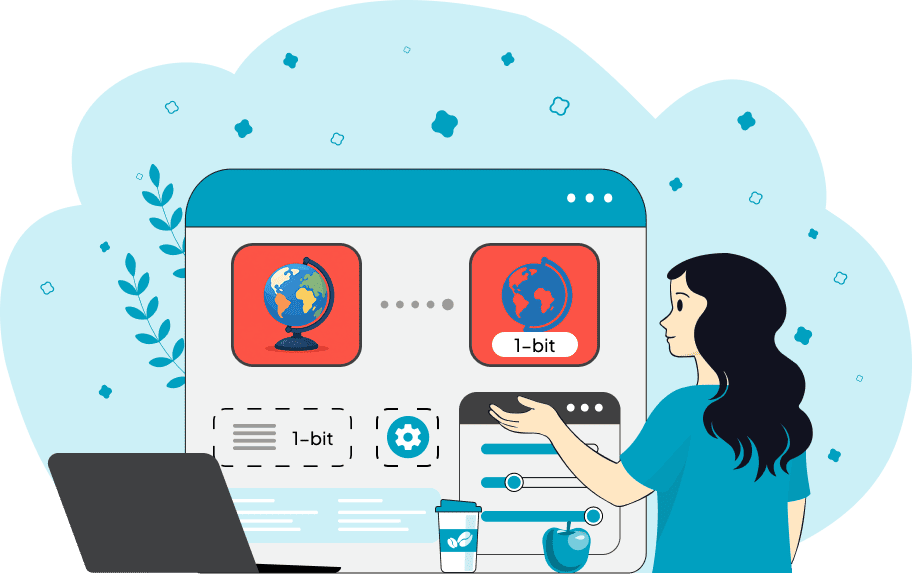
This free online browser-based program converts bitmap images to the minimal indexed 1-bit BMP format. A 1-bit bitmap has a palette of just two colors, and every pixel stores either palette index 0 or 1. Because each index occupies a single bit, one byte can hold eight neighboring pixels, making this one of the most compact BMP pixel formats. For color output, the tool selects two representative colors and maps each source pixel to the nearest of the two. In grayscale output, a black-and-white palette is used, and source colors are converted to brightness with the selected RGB-to-gray formula before being assigned to one of the two gray levels. With only two available colors, photographs lose most smooth shading and become strongly simplified. Dithering can preserve more visual structure by arranging the two palette colors in fine patterns that imitate intermediate tones. Available error-diffusion methods include Floyd-Steinberg, Atkinson, Sierra, and several others. If the input has transparency, you can set a background color that is applied before the two-color palette is built. Bmp-abulous!
This free online browser-based program converts bitmap images to the minimal indexed 1-bit BMP format. A 1-bit bitmap has a palette of just two colors, and every pixel stores either palette index 0 or 1. Because each index occupies a single bit, one byte can hold eight neighboring pixels, making this one of the most compact BMP pixel formats. For color output, the tool selects two representative colors and maps each source pixel to the nearest of the two. In grayscale output, a black-and-white palette is used, and source colors are converted to brightness with the selected RGB-to-gray formula before being assigned to one of the two gray levels. With only two available colors, photographs lose most smooth shading and become strongly simplified. Dithering can preserve more visual structure by arranging the two palette colors in fine patterns that imitate intermediate tones. Available error-diffusion methods include Floyd-Steinberg, Atkinson, Sierra, and several others. If the input has transparency, you can set a background color that is applied before the two-color palette is built. Bmp-abulous!
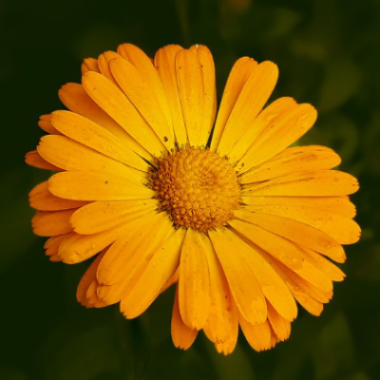
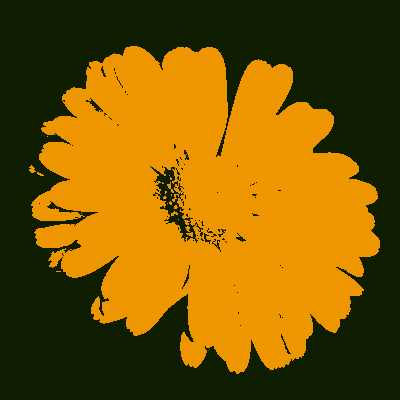
In this example, we convert a BMP from the highest standard bit depth, 32 bits, to the lowest, 1 bit. The loaded image stores each pixel in four bytes, while the output uses just one bit and a two-color palette. With only two colors available, smooth shading is reduced to broad orange and dark-green areas, giving the flower a much flatter, simplified appearance. The resulting file is about 25 KB, making it more than 17 times smaller than the original 434 KB. (Source: Pexels.)
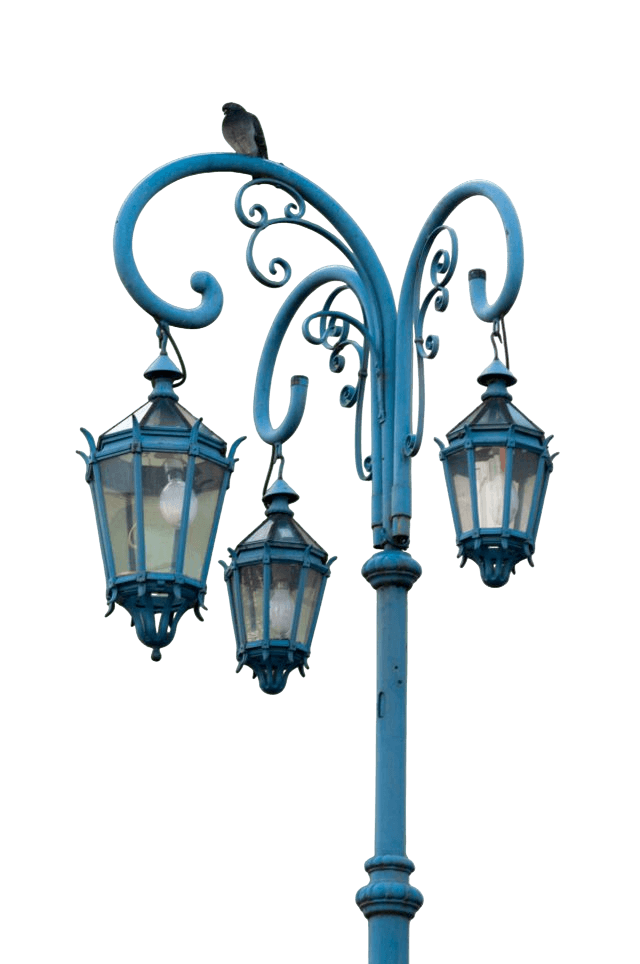
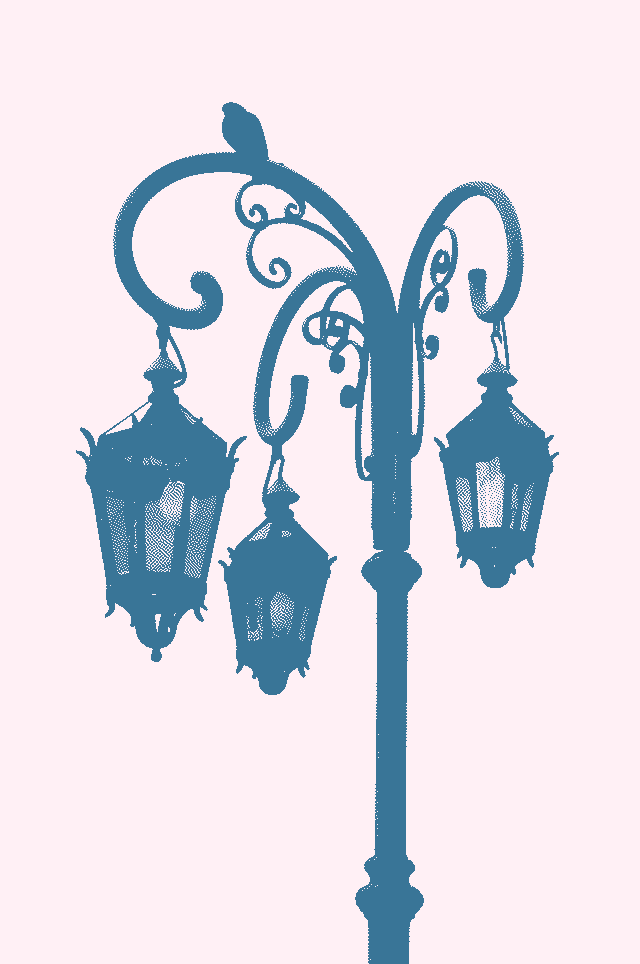
This example converts a transparent PNG of vintage street lanterns to a dithered 1-bit color BMP. Since the output cannot preserve alpha transparency, we place the image on a lavender-blush background before reducing it to two colors. We apply Atkinson dithering, which distributes these colors in fine patterns and helps preserve the lantern shapes and decorative details. (Source: Pexels.)
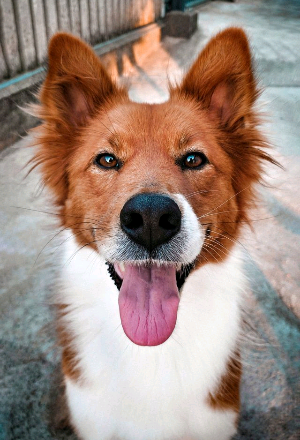
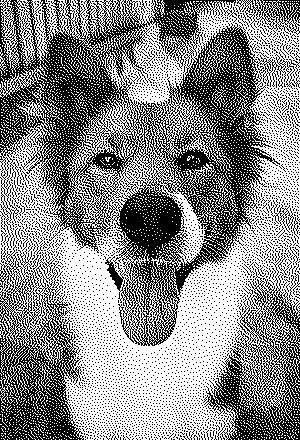
In this example, we convert a 16-bit 5-6-5 BMP of a border collie to a dithered 1-bit grayscale bitmap. Its colors use five bits for red, six for green, and five for blue. We first convert these colors to grayscale brightness values, then apply Sierra dithering to arrange black and white pixels in varying densities. This preserves much of the dog's shape, texture, and depth even though the final bitmap stores only one bit per pixel and no intermediate gray shades. (Source: Pexels.)
Create and edit bitmaps in your browser.
Make a bitmap smaller in size.
Convert a compressed bitmap to a raw RGB pixel bitmap.
Create a swirl of any radius in a bitmap.
Join two or more bitmaps together.
Place two or more bitmaps on top of each other.
Split a bitmap into multiple independent bitmaps.
Extract one or more selected areas from a bitmap.
Make copies of bitmaps and paste them together.
Skew a bitmap by an arbitrary angle.
Shift a bitmap to the left or right.
Convert a BMP to a Webp.
Convert a Webp to a BMP.
Convert a BMP to a PNG.
Convert a PNG to a BMP
Convert a BMP to a JPG.
Convert a JPG to a BMP.
Convert a BMP to a BPG.
Convert a BPG to a BMP.
Save GIF frames as BMP images.
Convert a bitmap to a single-frame GIF.
Create a Data URL scheme of a bitmap.
Convert a Data URL scheme back to a bitmap image.
Bit Blit two or more BMPs.
Put a new color table in a BMP.
Extract the color table of a BMP.
Extract raw RGB pixels from a BMP and print them out as text.
Create a bitmap image from raw RGB pixels.
Randomly rearrange colors in the BMP color table.
Reduce a BMP's memory footprint.
Destroy parts of a bitmap and make it glitchy.
Subscribe to our updates. We'll let you know when we release new tools and features, and when we organize online workshops.
Enter your email here
We're Browserling — a friendly and fun cross-browser testing company powered by alien technology. At Browserling, we love to make people's lives easier, so we created this collection of online bitmap tools. Our BMP tools have the simplest possible user interface and work directly in your browser without downloads or installations. You can use them to edit bitmap images, change BMP bit depth and colors, resize bitmaps, create transparent BMPs, work with bitmap pixels and byte arrays, and much more. Behind the scenes, our bitmap tools are powered by our web developer tools that we've created over the years. Check them out!